Overview
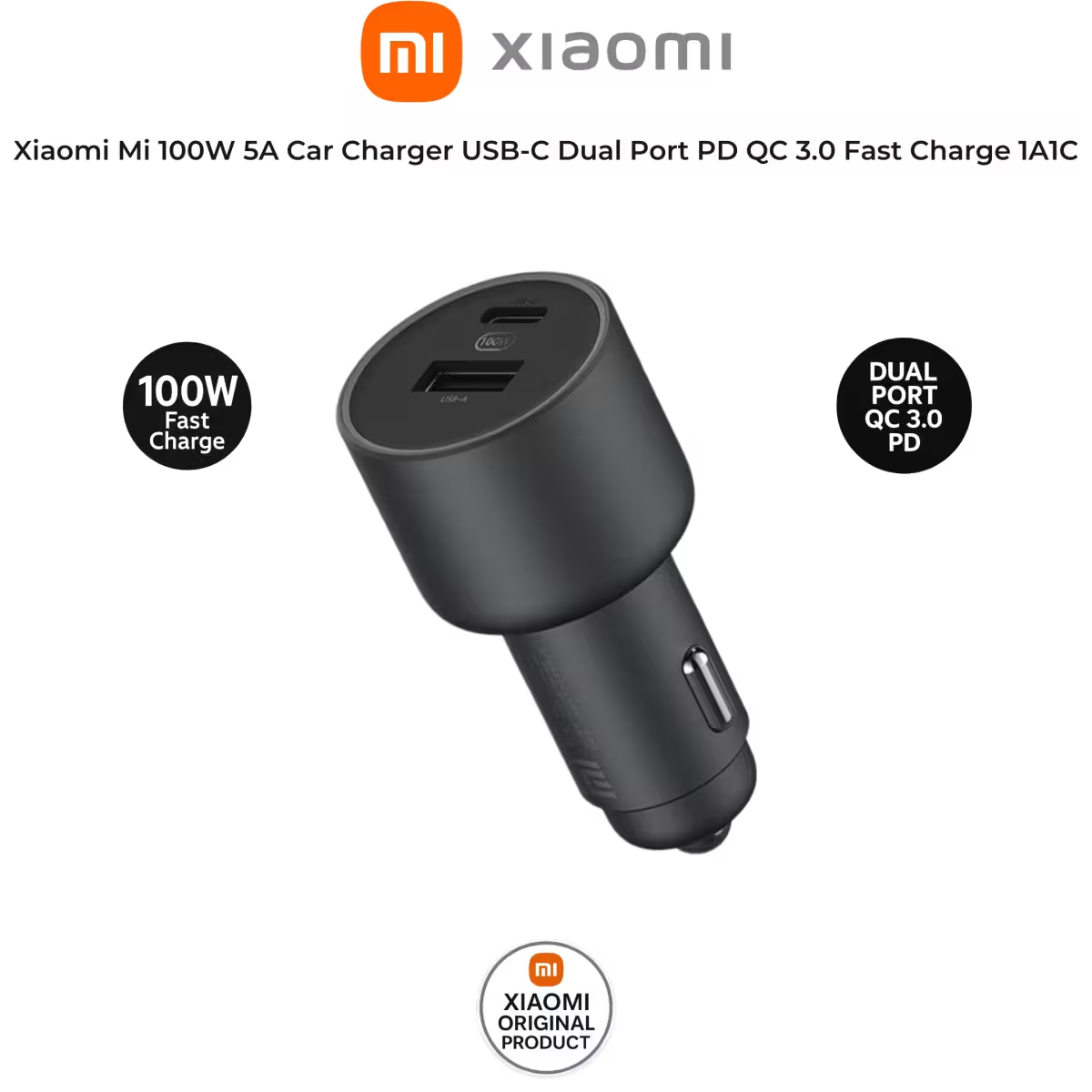
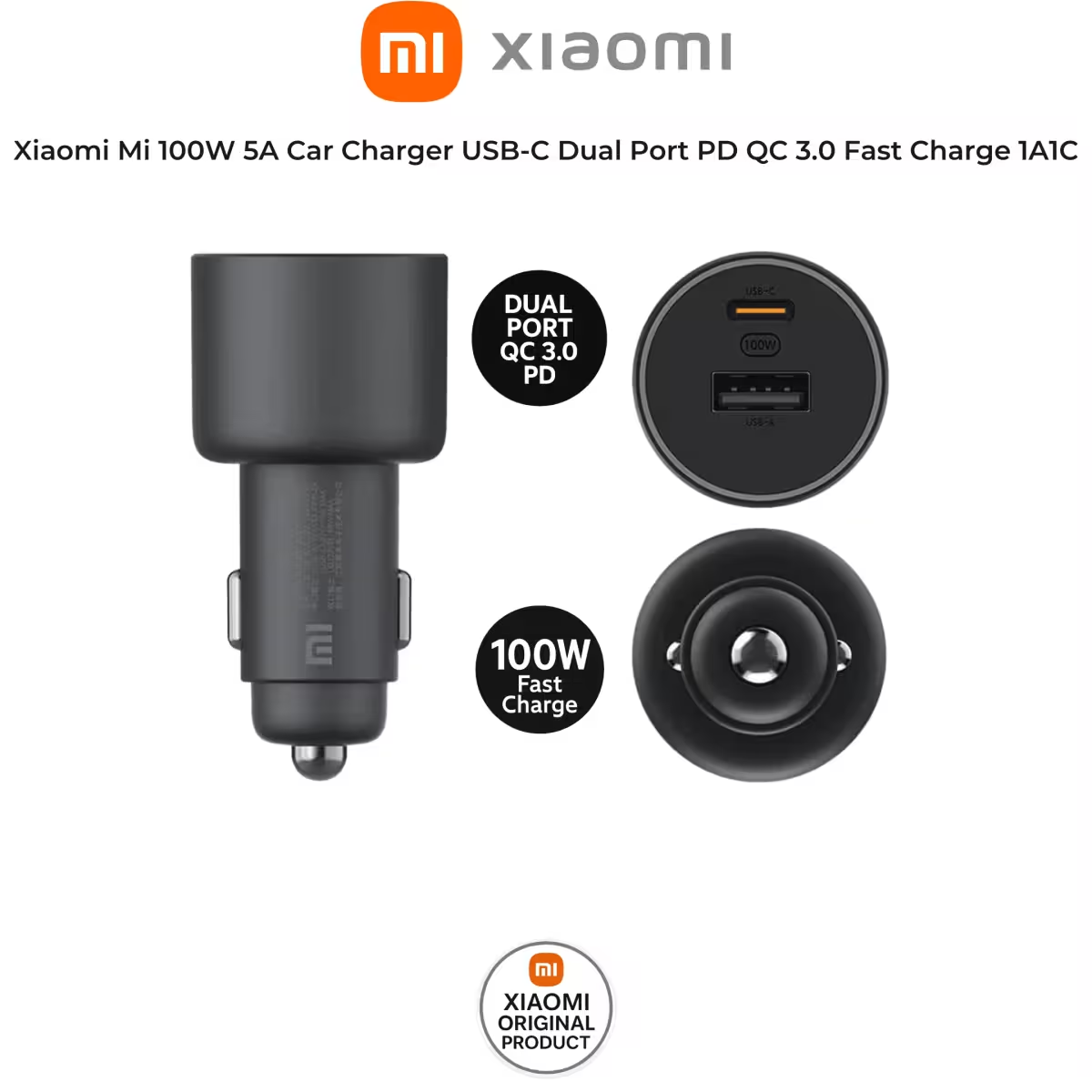
The Xiaomi Mi 100W car charger — CC07ZM, a dual-port 12V car charger delivering up to 100W from the USB-C port on its own, or 68W across both ports together. USB-C Power Delivery 3.0 and USB-A Quick Charge 3.0, a ring LED indicator for night use, four-way circuit protection, and a 5A E-Marker USB-C cable included.
✓ USB-C 20V/5A — up to 100W on its own · 68W total when both ports are in use
✓ 5A E-Marker USB-C cable included — required to reach the full 100W
✓ PD 3.0 · QC 2.0/3.0 · FCP · Apple and Samsung fast charge protocols
✓ Ring LED indicator for night use · over-temperature, short-circuit, over-voltage and over-current protection
The Xiaomi Mi 100W car charger is one of the few 12V chargers that can genuinely run a laptop rather than just topping up a phone. The USB-C port delivers 20V at 5A — 100W — which covers a USB-C laptop, a tablet, a phone at its maximum charging rate, or outdoor gear like a power bank or a torch. The USB-A port alongside it handles a second device on Quick Charge 3.0. One number is worth understanding before you buy, because it is the thing most listings gloss over: the 100W figure applies when the USB-C port is used on its own. Plug something into both ports and the combined output is 68W, shared between them. That is still substantial for a car charger, but it is not 100W plus another port's worth. The 5A E-Marker USB-C cable in the box is not an accessory you can skip — a standard USB-C cable caps at 3A and will hold the charger to around 60W regardless of what it is capable of. Four protection circuits cover over-temperature, short circuit, over-voltage and over-current, and the ring LED around the body makes the socket easy to find at night.
100W Single · 68W Dual
Reading the Power Figures Correctly
The USB-C port negotiates up to 20V at 5A, which is 100W — the same ceiling as most USB-C laptop chargers, and enough to charge a compatible laptop at full speed rather than trickling it. Xiaomi quotes a Mi 10 Ultra going from empty to full in 25 minutes on this charger. The USB-A port runs separately at 5V/3A or 9V/2A depending on what is connected. The point that matters in practice is what happens when both are occupied: total output across the two ports becomes 68W, allocated between them rather than added together. So a laptop on USB-C alongside a phone on USB-A will not both charge at their maximum rate simultaneously — the laptop drops back to make room. If your main use is charging one device fast, use the USB-C port alone and you have the full 100W. If you routinely charge two devices in the car, plan around 68W shared, which is still comfortably enough for two phones or a tablet and a phone. Input is 12V–24V at up to 9.5A, so the charger works in both a car and a truck or van running a 24V system.
E-Marker Cable · Why It Is Included
The Cable Is Part of the Specification
The USB-C specification caps ordinary cables at 3A. To carry 5A safely, a cable must contain an E-Marker chip — a small controller that identifies the cable to the charger and the device and declares that it is rated for the higher current. Without that declaration the charger will not attempt 5A no matter what it is capable of, because it has no way to know the cable can handle it. At 20V and 3A the ceiling becomes 60W rather than 100W. This is why the E-Marker cable is supplied in the box rather than sold separately, and why substituting a generic USB-C cable quietly costs you 40W. If you later replace the cable, look specifically for one rated at 5A or 100W — the marking is usually printed on the connector housing or the packaging. Beyond the cable, the charger supports the common fast-charge protocols so it works properly with devices from different manufacturers: USB Power Delivery 3.0 for laptops, iPhones and most modern Android phones; Quick Charge 2.0 and 3.0 and Huawei's FCP on the USB-A side; plus Apple 2.4A, Samsung 5V/2A and standard DCP for older devices.
Ring LED · Four-Way Protection
Safety and Everyday Use
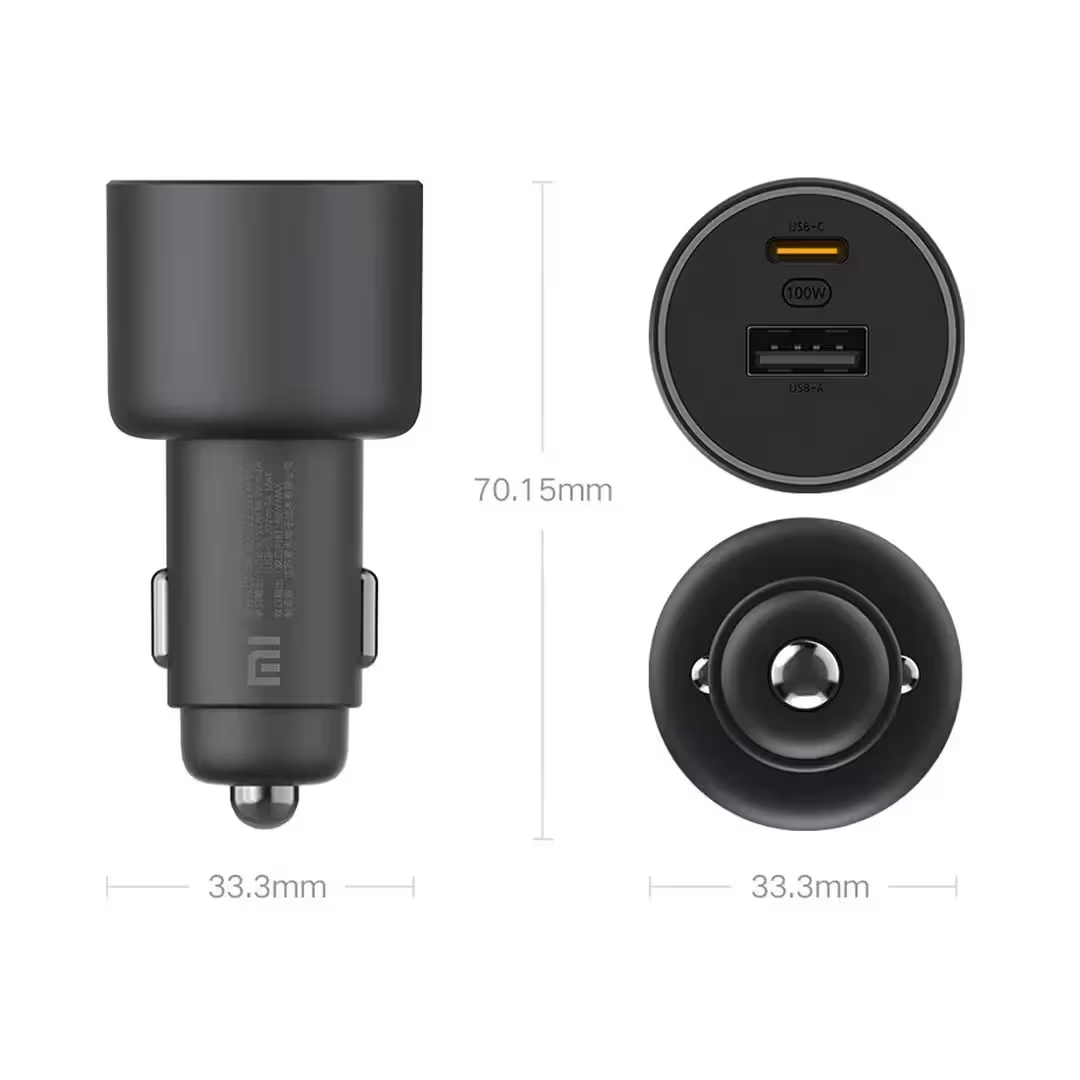
Pushing 100W through a 12V socket generates real heat, and a car interior in summer is already a hot environment, so the protection circuitry here is doing more than ticking a box. Over-temperature protection reduces or cuts output if the charger exceeds its safe operating range — the failure mode that matters most in a car parked in the sun. Over-voltage protection guards against the spikes that vehicle electrical systems produce when starting the engine or switching heavy loads. Over-current and short-circuit protection cover a faulty cable or device. The ring-shaped LED around the charger body lights the socket area, which sounds like a small thing until you are reaching for the socket in the footwell at night. It displays white on standby so you can see at a glance that the charger is seated and receiving power. The body measures 75.15 × 33.3 × 33.3mm, sitting proud of the socket enough to grip and remove easily without protruding far into the cabin. One practical c
✓ USB-C 20V/5A — up to 100W on its own · 68W total when both ports are in use
✓ 5A E-Marker USB-C cable included — required to reach the full 100W
✓ PD 3.0 · QC 2.0/3.0 · FCP · Apple and Samsung fast charge protocols
✓ Ring LED indicator for night use · over-temperature, short-circuit, over-voltage and over-current protection
The Xiaomi Mi 100W car charger is one of the few 12V chargers that can genuinely run a laptop rather than just topping up a phone. The USB-C port delivers 20V at 5A — 100W — which covers a USB-C laptop, a tablet, a phone at its maximum charging rate, or outdoor gear like a power bank or a torch. The USB-A port alongside it handles a second device on Quick Charge 3.0. One number is worth understanding before you buy, because it is the thing most listings gloss over: the 100W figure applies when the USB-C port is used on its own. Plug something into both ports and the combined output is 68W, shared between them. That is still substantial for a car charger, but it is not 100W plus another port's worth. The 5A E-Marker USB-C cable in the box is not an accessory you can skip — a standard USB-C cable caps at 3A and will hold the charger to around 60W regardless of what it is capable of. Four protection circuits cover over-temperature, short circuit, over-voltage and over-current, and the ring LED around the body makes the socket easy to find at night.
100W Single · 68W Dual
Reading the Power Figures Correctly
The USB-C port negotiates up to 20V at 5A, which is 100W — the same ceiling as most USB-C laptop chargers, and enough to charge a compatible laptop at full speed rather than trickling it. Xiaomi quotes a Mi 10 Ultra going from empty to full in 25 minutes on this charger. The USB-A port runs separately at 5V/3A or 9V/2A depending on what is connected. The point that matters in practice is what happens when both are occupied: total output across the two ports becomes 68W, allocated between them rather than added together. So a laptop on USB-C alongside a phone on USB-A will not both charge at their maximum rate simultaneously — the laptop drops back to make room. If your main use is charging one device fast, use the USB-C port alone and you have the full 100W. If you routinely charge two devices in the car, plan around 68W shared, which is still comfortably enough for two phones or a tablet and a phone. Input is 12V–24V at up to 9.5A, so the charger works in both a car and a truck or van running a 24V system.
E-Marker Cable · Why It Is Included
The Cable Is Part of the Specification
The USB-C specification caps ordinary cables at 3A. To carry 5A safely, a cable must contain an E-Marker chip — a small controller that identifies the cable to the charger and the device and declares that it is rated for the higher current. Without that declaration the charger will not attempt 5A no matter what it is capable of, because it has no way to know the cable can handle it. At 20V and 3A the ceiling becomes 60W rather than 100W. This is why the E-Marker cable is supplied in the box rather than sold separately, and why substituting a generic USB-C cable quietly costs you 40W. If you later replace the cable, look specifically for one rated at 5A or 100W — the marking is usually printed on the connector housing or the packaging. Beyond the cable, the charger supports the common fast-charge protocols so it works properly with devices from different manufacturers: USB Power Delivery 3.0 for laptops, iPhones and most modern Android phones; Quick Charge 2.0 and 3.0 and Huawei's FCP on the USB-A side; plus Apple 2.4A, Samsung 5V/2A and standard DCP for older devices.
Ring LED · Four-Way Protection
Safety and Everyday Use
Pushing 100W through a 12V socket generates real heat, and a car interior in summer is already a hot environment, so the protection circuitry here is doing more than ticking a box. Over-temperature protection reduces or cuts output if the charger exceeds its safe operating range — the failure mode that matters most in a car parked in the sun. Over-voltage protection guards against the spikes that vehicle electrical systems produce when starting the engine or switching heavy loads. Over-current and short-circuit protection cover a faulty cable or device. The ring-shaped LED around the charger body lights the socket area, which sounds like a small thing until you are reaching for the socket in the footwell at night. It displays white on standby so you can see at a glance that the charger is seated and receiving power. The body measures 75.15 × 33.3 × 33.3mm, sitting proud of the socket enough to grip and remove easily without protruding far into the cabin. One practical c
Read More
Gallery
Description
Xiaomi Mi 100W Car Charger
High-power dual-port car charger designed for fast and reliable charging on the road.
Product Description
The Xiaomi Mi 100W Car Charger is designed for drivers who need a dependable and high-capacity charging solution while travelling. With its powerful output capability, it supports fast charging for compatible smartphones, tablets, and other USB-powered devices commonly used in
modern vehicles.
Featuring a dual-port layout, the charger allows two devices to be powered at the same time without compromising stability. The USB-C port is designed for high-power delivery on supported devices, while the additional USB-A port offers flexibility for charging accessories or secondary devices.
Built with a durable metal housing and integrated safety protections, the Xiaomi Mi 100W Car Charger is suitable for everyday driving, long journeys, and professional use where consistent power delivery is essential.
Feature Highlights
High-power car charger designed for fast charging on compatible devices
Dual-port design with USB-C and USB-A outputs
Supports modern fast-charging standards on supported devices
Durable metal body for improved heat dissipation
Built-in protection against overheating and overcurrent
Is It Right For You?
Fast charging smartphones in the car✔ Ideal
Charging multiple devices simultaneously✔ Supported
Long-distance or professional driving✔ Well suited
Buyer Tip
For best performance, pair this charger with high-quality USB-C or USB-A cables that support fast charging on your specific device.
Mini Benchmark
Offers significantly higher power capacity and better heat management compared to standard low-wattage car chargers.
Product Specifications
BrandXiaomi
ModelMi 100W Car Charger
PortsUSB-C + USB-A
Primary UseIn-car fast charging for compatible devices
High-power dual-port car charger designed for fast and reliable charging on the road.
Product Description
The Xiaomi Mi 100W Car Charger is designed for drivers who need a dependable and high-capacity charging solution while travelling. With its powerful output capability, it supports fast charging for compatible smartphones, tablets, and other USB-powered devices commonly used in
modern vehicles.
Featuring a dual-port layout, the charger allows two devices to be powered at the same time without compromising stability. The USB-C port is designed for high-power delivery on supported devices, while the additional USB-A port offers flexibility for charging accessories or secondary devices.
Built with a durable metal housing and integrated safety protections, the Xiaomi Mi 100W Car Charger is suitable for everyday driving, long journeys, and professional use where consistent power delivery is essential.
Feature Highlights
High-power car charger designed for fast charging on compatible devices
Dual-port design with USB-C and USB-A outputs
Supports modern fast-charging standards on supported devices
Durable metal body for improved heat dissipation
Built-in protection against overheating and overcurrent
Is It Right For You?
Fast charging smartphones in the car✔ Ideal
Charging multiple devices simultaneously✔ Supported
Long-distance or professional driving✔ Well suited
Buyer Tip
For best performance, pair this charger with high-quality USB-C or USB-A cables that support fast charging on your specific device.
Mini Benchmark
Offers significantly higher power capacity and better heat management compared to standard low-wattage car chargers.
Product Specifications
BrandXiaomi
ModelMi 100W Car Charger
PortsUSB-C + USB-A
Primary UseIn-car fast charging for compatible devices