Overview
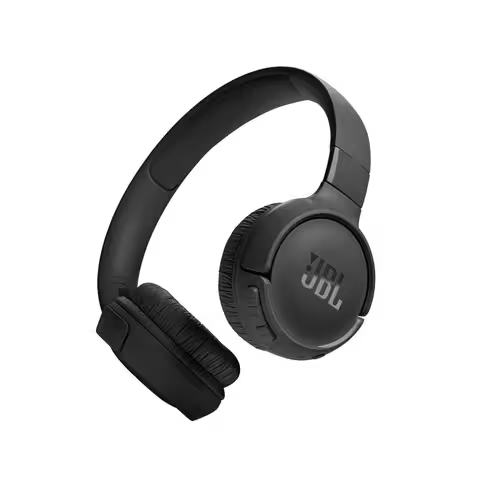
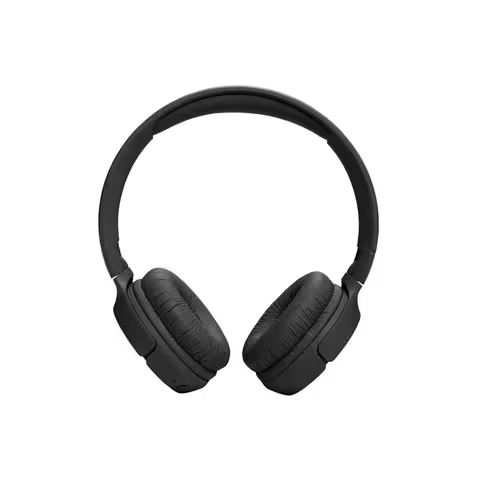
The JBL Tune 520BT Wireless On-Ear Headphones – Black — JBL Pure Bass sound, Bluetooth 5.3 with multipoint, up to 57 hours of battery with 5-minute Speed Charge for 3 hours of play, USB-C, Voice Aware for natural-sounding calls, and custom EQ through the free JBL Headphones app. Foldable. Black.
✓ Up to 57 hours battery · 5-minute Speed Charge → 3 hours play · USB-C
✓ Bluetooth 5.3 · multipoint — switch between phone and laptop automatically
✓ Custom EQ in the free JBL Headphones app · Voice Aware for natural calls
✓ JBL Pure Bass · earcup button controls · voice assistant · folds flat
The JBL Tune 520BT is the direct successor to the Tune 510BT and the upgrade is not cosmetic — battery life rises from 40 to 57 hours, Bluetooth moves from 5.0 to 5.3, the five-minute Speed Charge now returns three hours of playback instead of two, and two features arrive that the 510BT did not have at all: custom EQ through the free JBL Headphones app, and Voice Aware, which feeds a controlled amount of your own voice back into the earcups during calls so you do not end up talking too loudly. Underneath sits the same JBL Pure Bass tuning that runs through the whole Tune range — a bass-forward signature built for the music people actually listen to on a commute. The controls are on the earcup rather than an inline remote, the headphones fold flat for a bag, and a long press wakes Siri or Google Assistant without touching the phone. Black.
57 Hours · 5 min = 3 Hours
The Battery Is the Headline
Fifty-seven hours is a substantial figure even by the standards of wireless headphones with no noise cancellation to power. JBL measures it at moderate volume, so real-world use at commuting levels — where you push the volume up to compete with train and traffic noise — will land lower, realistically in the 40 to 48 hour range. Even at the pessimistic end, that is a fortnight of daily commutes on one charge, and it moves these headphones out of the category where you think about charging at all. The Speed Charge specification is the one that matters more day to day: five minutes on USB-C returns roughly three hours of playback, which is enough to rescue a flat pair while you find your keys and put your coat on. A full charge from empty takes about two hours. USB-C means the same cable as your phone and laptop rather than a legacy Micro-USB lead, and the 520BT is a generation ahead of the 510BT here — the older model was already USB-C but returned only two hours from the same five-minute charge.
BT 5.3 · Multipoint · Voice Aware
Two Devices and Better Calls
Multipoint keeps the 520BT connected to two Bluetooth devices at the same time — a laptop and a phone being the common pair. Watch something on the laptop, and when a call arrives on the phone the headphones switch across on their own, then hand back to the laptop when the call ends. There is no manual disconnecting and re-pairing, which is the friction that stops most people from using one set of headphones across their devices. Bluetooth 5.3 brings improved connection stability and lower power draw than 5.0, which is part of how the battery figure climbed. Voice Aware is the feature that did not exist on the 510BT and is easy to overlook on a spec sheet. When you wear closed-back headphones and speak, your own voice sounds muffled because your ears are covered — the natural reaction is to talk louder without realising it, which is why people on calls with headphones often sound like they are shouting. Voice Aware routes a measured amount of your own voice from the microphone back into the earcups so you hear yourself at a natural level and speak normally. The amount fed back is adjustable in the JBL Headphones app.
Pure Bass · App EQ · Foldable
Sound You Can Actually Adjust
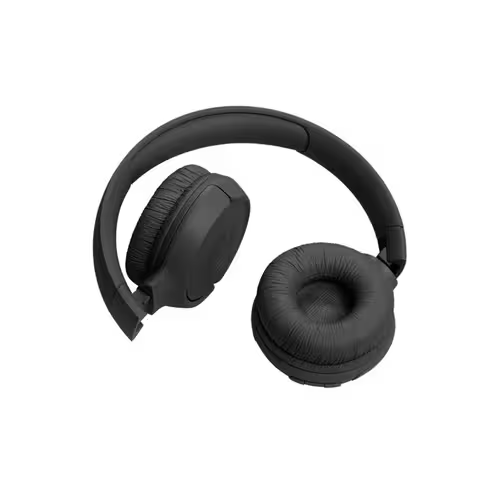
JBL Pure Bass is the house sound across the Tune range: low frequencies pushed forward with enough midrange clarity to keep vocals intelligible, tuned for pop, hip-hop, electronic and the rest of what dominates streaming playlists rather than for neutral studio reference. Where the 520BT differs from its predecessor is that you are no longer stuck with it. The free JBL Headphones app adds a graphic EQ with presets and a custom curve, so if the default bass emphasis is heavier than you want for podcasts or acoustic material, you can pull it back and save the setting to the headphones. The app also carries voice prompts in your own language for pairing and battery status, and the Voice Aware level control. On-ear (supra-aural) means the earcups rest on the ear rather than enclosing it, which keeps the headphones light and compact but delivers less passive isolation than an over-ear design and can feel warm during very long sessions — worth knowing before you buy. The hinges fold the earcups flat so they lie against a laptop in a backpack rather than taking up depth, and the controls sit on the earcup so there is no inline remote to fish for.
Right choice if you…
✔ Want the longest battery life in JBL's
✓ Up to 57 hours battery · 5-minute Speed Charge → 3 hours play · USB-C
✓ Bluetooth 5.3 · multipoint — switch between phone and laptop automatically
✓ Custom EQ in the free JBL Headphones app · Voice Aware for natural calls
✓ JBL Pure Bass · earcup button controls · voice assistant · folds flat
The JBL Tune 520BT is the direct successor to the Tune 510BT and the upgrade is not cosmetic — battery life rises from 40 to 57 hours, Bluetooth moves from 5.0 to 5.3, the five-minute Speed Charge now returns three hours of playback instead of two, and two features arrive that the 510BT did not have at all: custom EQ through the free JBL Headphones app, and Voice Aware, which feeds a controlled amount of your own voice back into the earcups during calls so you do not end up talking too loudly. Underneath sits the same JBL Pure Bass tuning that runs through the whole Tune range — a bass-forward signature built for the music people actually listen to on a commute. The controls are on the earcup rather than an inline remote, the headphones fold flat for a bag, and a long press wakes Siri or Google Assistant without touching the phone. Black.
57 Hours · 5 min = 3 Hours
The Battery Is the Headline
Fifty-seven hours is a substantial figure even by the standards of wireless headphones with no noise cancellation to power. JBL measures it at moderate volume, so real-world use at commuting levels — where you push the volume up to compete with train and traffic noise — will land lower, realistically in the 40 to 48 hour range. Even at the pessimistic end, that is a fortnight of daily commutes on one charge, and it moves these headphones out of the category where you think about charging at all. The Speed Charge specification is the one that matters more day to day: five minutes on USB-C returns roughly three hours of playback, which is enough to rescue a flat pair while you find your keys and put your coat on. A full charge from empty takes about two hours. USB-C means the same cable as your phone and laptop rather than a legacy Micro-USB lead, and the 520BT is a generation ahead of the 510BT here — the older model was already USB-C but returned only two hours from the same five-minute charge.
BT 5.3 · Multipoint · Voice Aware
Two Devices and Better Calls
Multipoint keeps the 520BT connected to two Bluetooth devices at the same time — a laptop and a phone being the common pair. Watch something on the laptop, and when a call arrives on the phone the headphones switch across on their own, then hand back to the laptop when the call ends. There is no manual disconnecting and re-pairing, which is the friction that stops most people from using one set of headphones across their devices. Bluetooth 5.3 brings improved connection stability and lower power draw than 5.0, which is part of how the battery figure climbed. Voice Aware is the feature that did not exist on the 510BT and is easy to overlook on a spec sheet. When you wear closed-back headphones and speak, your own voice sounds muffled because your ears are covered — the natural reaction is to talk louder without realising it, which is why people on calls with headphones often sound like they are shouting. Voice Aware routes a measured amount of your own voice from the microphone back into the earcups so you hear yourself at a natural level and speak normally. The amount fed back is adjustable in the JBL Headphones app.
Pure Bass · App EQ · Foldable
Sound You Can Actually Adjust
JBL Pure Bass is the house sound across the Tune range: low frequencies pushed forward with enough midrange clarity to keep vocals intelligible, tuned for pop, hip-hop, electronic and the rest of what dominates streaming playlists rather than for neutral studio reference. Where the 520BT differs from its predecessor is that you are no longer stuck with it. The free JBL Headphones app adds a graphic EQ with presets and a custom curve, so if the default bass emphasis is heavier than you want for podcasts or acoustic material, you can pull it back and save the setting to the headphones. The app also carries voice prompts in your own language for pairing and battery status, and the Voice Aware level control. On-ear (supra-aural) means the earcups rest on the ear rather than enclosing it, which keeps the headphones light and compact but delivers less passive isolation than an over-ear design and can feel warm during very long sessions — worth knowing before you buy. The hinges fold the earcups flat so they lie against a laptop in a backpack rather than taking up depth, and the controls sit on the earcup so there is no inline remote to fish for.
Right choice if you…
✔ Want the longest battery life in JBL's
Gallery