Overview
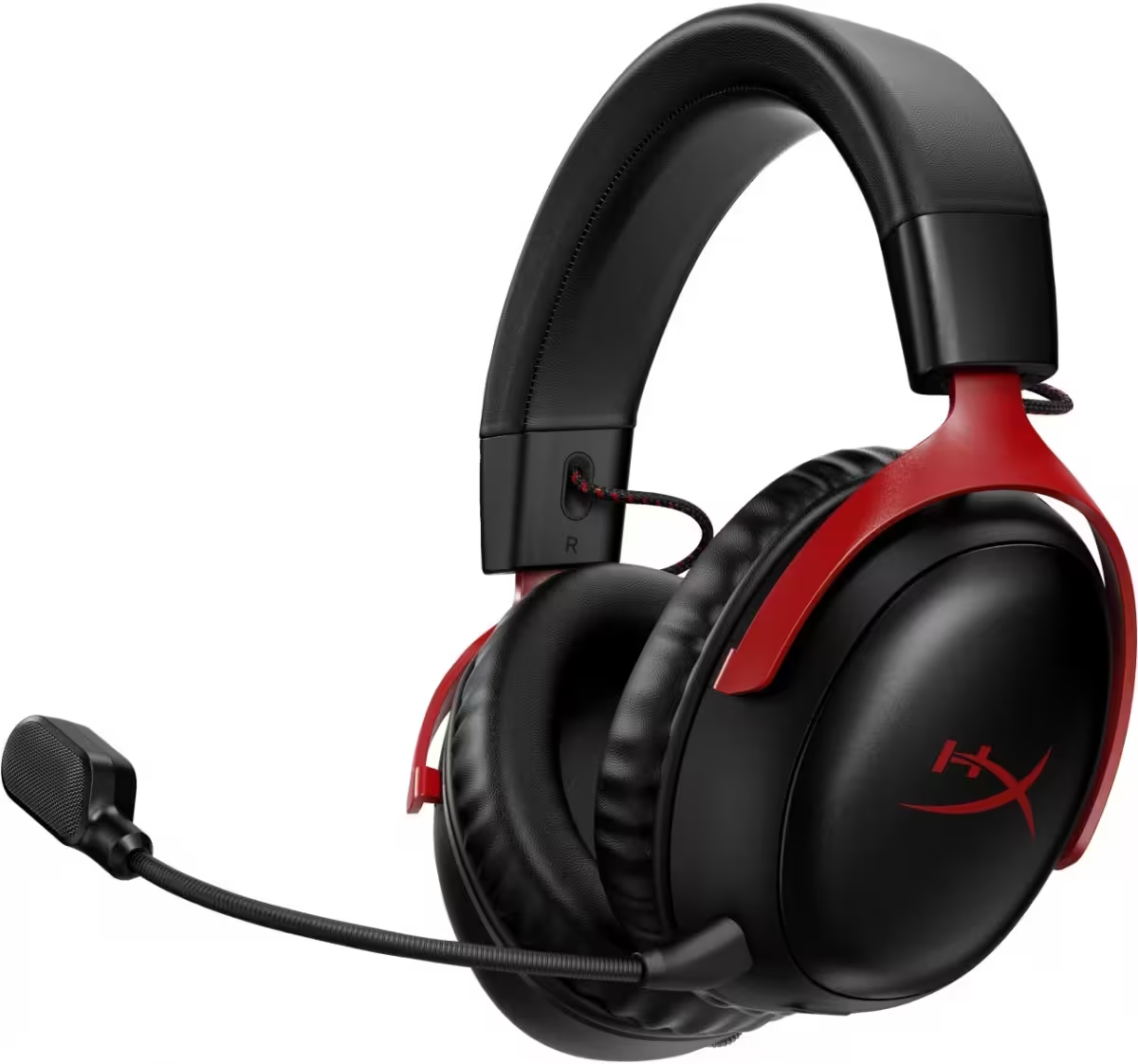
The HyperX Cloud III Wireless Gaming Headset Black/Red — 77Z46AA, with angled 53mm drivers, DTS Headphone:X spatial audio on lifetime activation, up to 120 hours of battery on a single charge, 2.4GHz wireless, a detachable 10mm noise-cancelling microphone with LED mute indicator, memory foam and leatherette cushioning and an aluminium frame. PC, PS5, PS4 and Nintendo Switch.
✓ Up to 120 hours of battery — over a week of play on one charge · USB-C
✓ Angled 53mm drivers · DTS Headphone:X spatial audio, lifetime activation
✓ Detachable 10mm mic · metal mesh pop filter · LED mute indicator
✓ 2.4GHz USB-C dongle with USB-A adapter · PC, PS5, PS4, Switch · aluminium frame
The HyperX Cloud III Wireless is the wireless successor to the Cloud II Wireless — a headset that earned its reputation on comfort and durability rather than on a feature list, and the Cloud III carries that forward while fixing the one thing that limits most wireless headsets: the battery. At up to 120 hours on a single charge, this is a headset you charge every few weeks rather than every few days, which changes how you use it. Around that sit angled 53mm drivers retuned by HyperX's audio engineers, DTS Headphone:X spatial audio with lifetime activation included rather than as a subscription, and the memory foam and leatherette cushioning that the Cloud line is known for. The frame is aluminium — genuinely metal rather than metal-effect plastic — which is why these survive being thrown in a bag. The 10mm detachable microphone is an upgrade over the Cloud II's, with a metal mesh pop filter built in and an LED on the tip that tells you at a glance whether you are muted. Connection is 2.4GHz through a USB-C dongle, with a USB-A adapter supplied for desktops and consoles. Black and red.
120 Hours · 2.4GHz
Battery Measured in Weeks
One hundred and twenty hours puts the Cloud III Wireless near the top of the wireless gaming headset field, and the practical effect is larger than the number suggests. At three hours a night it is around six weeks between charges. At that interval you stop thinking about the battery entirely — there is no evening where the headset dies mid-session because you forgot to plug it in, which is the single most common frustration with wireless headsets rated at 15 to 25 hours. HyperX measures the figure at 50% volume, so heavy use at high volume will come in lower, but even a conservative reading leaves you well clear of a week of daily play. Charging is over USB-C from the port on the left earcup, using the same cable as a phone or laptop. The wireless connection is 2.4GHz through a small USB-C dongle, which sends uncompressed audio with latency low enough that footsteps and gunfire stay locked to what is on screen — the reason competitive players use 2.4GHz rather than Bluetooth, which introduces tens of milliseconds of delay through audio compression. A USB-C to USB-A adapter is included, so the dongle works with a desktop PC or a PS5 as easily as with a USB-C laptop.
53mm Angled Drivers · DTS
Why the Drivers Sit at an Angle
In most headsets the driver sits flat against the earcup, firing straight at the side of the head. The Cloud III's 53mm drivers are mounted at an angle so that they aim into the ear canal rather than at the ear itself. That angle changes how sound arrives: instead of hitting the outer ear square on and reflecting around inside the cup, the wavefront travels a path closer to how sound reaches you in a room, which widens the perceived soundstage and improves the sense of where a sound is coming from. HyperX also retuned the drivers for the Cloud III rather than carrying the Cloud II's tuning across. DTS Headphone:X builds on this by processing stereo audio into a virtual 3D field, placing sounds above, behind and around you rather than only left and right — in practice that means hearing that someone is on the floor above rather than simply somewhere to your left. The activation is a lifetime licence included with the headset, not a trial or a subscription, and it applies on PC. On PS5 the console's own Tempest 3D audio handles spatial processing instead, and on Switch you get standard stereo — both perfectly good, just not the DTS layer.
Aluminium Frame · Memory Foam · 10mm Mic
Built to Be Worn and Carried
The frame is aluminium rather than plastic, which matters most at the headband slider and the earcup yokes — the two points where gaming headsets fail. A plastic yoke develops stress whitening and eventually snaps after enough flexing; an aluminium one bends and returns. It is the reason Cloud headsets tend to still be working years after purchase. Comfort comes from HyperX's signature memory foam in both the headband and the ear cushions, wrapped in leatherette. Memory foam responds to the warmth and pressure of the head and settles into shape over the first few minutes of wear, which spreads clamping force over a wider area instead of concentrating it at two points — the mechanism behin
✓ Up to 120 hours of battery — over a week of play on one charge · USB-C
✓ Angled 53mm drivers · DTS Headphone:X spatial audio, lifetime activation
✓ Detachable 10mm mic · metal mesh pop filter · LED mute indicator
✓ 2.4GHz USB-C dongle with USB-A adapter · PC, PS5, PS4, Switch · aluminium frame
The HyperX Cloud III Wireless is the wireless successor to the Cloud II Wireless — a headset that earned its reputation on comfort and durability rather than on a feature list, and the Cloud III carries that forward while fixing the one thing that limits most wireless headsets: the battery. At up to 120 hours on a single charge, this is a headset you charge every few weeks rather than every few days, which changes how you use it. Around that sit angled 53mm drivers retuned by HyperX's audio engineers, DTS Headphone:X spatial audio with lifetime activation included rather than as a subscription, and the memory foam and leatherette cushioning that the Cloud line is known for. The frame is aluminium — genuinely metal rather than metal-effect plastic — which is why these survive being thrown in a bag. The 10mm detachable microphone is an upgrade over the Cloud II's, with a metal mesh pop filter built in and an LED on the tip that tells you at a glance whether you are muted. Connection is 2.4GHz through a USB-C dongle, with a USB-A adapter supplied for desktops and consoles. Black and red.
120 Hours · 2.4GHz
Battery Measured in Weeks
One hundred and twenty hours puts the Cloud III Wireless near the top of the wireless gaming headset field, and the practical effect is larger than the number suggests. At three hours a night it is around six weeks between charges. At that interval you stop thinking about the battery entirely — there is no evening where the headset dies mid-session because you forgot to plug it in, which is the single most common frustration with wireless headsets rated at 15 to 25 hours. HyperX measures the figure at 50% volume, so heavy use at high volume will come in lower, but even a conservative reading leaves you well clear of a week of daily play. Charging is over USB-C from the port on the left earcup, using the same cable as a phone or laptop. The wireless connection is 2.4GHz through a small USB-C dongle, which sends uncompressed audio with latency low enough that footsteps and gunfire stay locked to what is on screen — the reason competitive players use 2.4GHz rather than Bluetooth, which introduces tens of milliseconds of delay through audio compression. A USB-C to USB-A adapter is included, so the dongle works with a desktop PC or a PS5 as easily as with a USB-C laptop.
53mm Angled Drivers · DTS
Why the Drivers Sit at an Angle
In most headsets the driver sits flat against the earcup, firing straight at the side of the head. The Cloud III's 53mm drivers are mounted at an angle so that they aim into the ear canal rather than at the ear itself. That angle changes how sound arrives: instead of hitting the outer ear square on and reflecting around inside the cup, the wavefront travels a path closer to how sound reaches you in a room, which widens the perceived soundstage and improves the sense of where a sound is coming from. HyperX also retuned the drivers for the Cloud III rather than carrying the Cloud II's tuning across. DTS Headphone:X builds on this by processing stereo audio into a virtual 3D field, placing sounds above, behind and around you rather than only left and right — in practice that means hearing that someone is on the floor above rather than simply somewhere to your left. The activation is a lifetime licence included with the headset, not a trial or a subscription, and it applies on PC. On PS5 the console's own Tempest 3D audio handles spatial processing instead, and on Switch you get standard stereo — both perfectly good, just not the DTS layer.
Aluminium Frame · Memory Foam · 10mm Mic
Built to Be Worn and Carried
The frame is aluminium rather than plastic, which matters most at the headband slider and the earcup yokes — the two points where gaming headsets fail. A plastic yoke develops stress whitening and eventually snaps after enough flexing; an aluminium one bends and returns. It is the reason Cloud headsets tend to still be working years after purchase. Comfort comes from HyperX's signature memory foam in both the headband and the ear cushions, wrapped in leatherette. Memory foam responds to the warmth and pressure of the head and settles into shape over the first few minutes of wear, which spreads clamping force over a wider area instead of concentrating it at two points — the mechanism behin
Gallery